How Short-Staffed Accounting Firms Can Increase Capacity Without Hiring More Bookkeepers

Accounting firms do not feel understaffed only because hiring is hard. They feel understaffed because too much of the team’s day is still being spent on low-leverage bookkeeping work.
That is why searches like short-staffed accounting firms, how to increase accounting firm capacity, scale accounting firm without hiring, and accounting firm staffing shortage keep showing up. The problem is not just headcount. The problem is that repetitive transaction work, scattered follow-up, and unclear backlog visibility consume the capacity you already have.
Wesley is useful here because it helps firms turn hidden operational drag into visible, manageable workflow.
Why short-staffed accounting firms feel overloaded
When a firm is understaffed, the backlog usually grows in predictable places:
- partners and managers do not have a clean view of which clients are actually creating the most bookkeeping pressure
- staff spend too much time recategorizing transactions that should already be handled consistently
- the remaining exceptions get chased across inboxes, notes, and partial client follow-up threads
That is when capacity starts to disappear. A firm may technically have enough people to handle the work, but not enough structure to move the work efficiently.
Choose your workflow
Tax workflow hub
The full cluster for W-9 collection, 1099 review, and filing-season cleanup workflows.
Collect a W-9 before filing a 1099
The cleanest timing and follow-up workflow before filing season turns reactive.
1099-K vs 1099-NEC
How to separate processor-reported payments from contractor compensation.
Why a contractor is missing from your QuickBooks 1099
A practical troubleshooting flow for inactive vendors, thresholds, and mapping issues.
Why credit card payments do not show up on 1099s
The exact reporting logic behind excluded card and payment-app transactions.
Coverage and resources
Open the authority pages that support this workflow.
Supported banks
See which institutions Wesley already covers and when statement fallback still matters.
Open page →
Integrations hub
See where Wesley fits before QuickBooks, Xero, QIF, Sage, and NetSuite workflows.
Open page →
Template library
Use saveable SOPs and checklists alongside the workflow pages.
Open page →
Step 1: get a real capacity view across clients
Before a short-staffed accounting firm hires more people, it needs a better view of where the workload is accumulating.
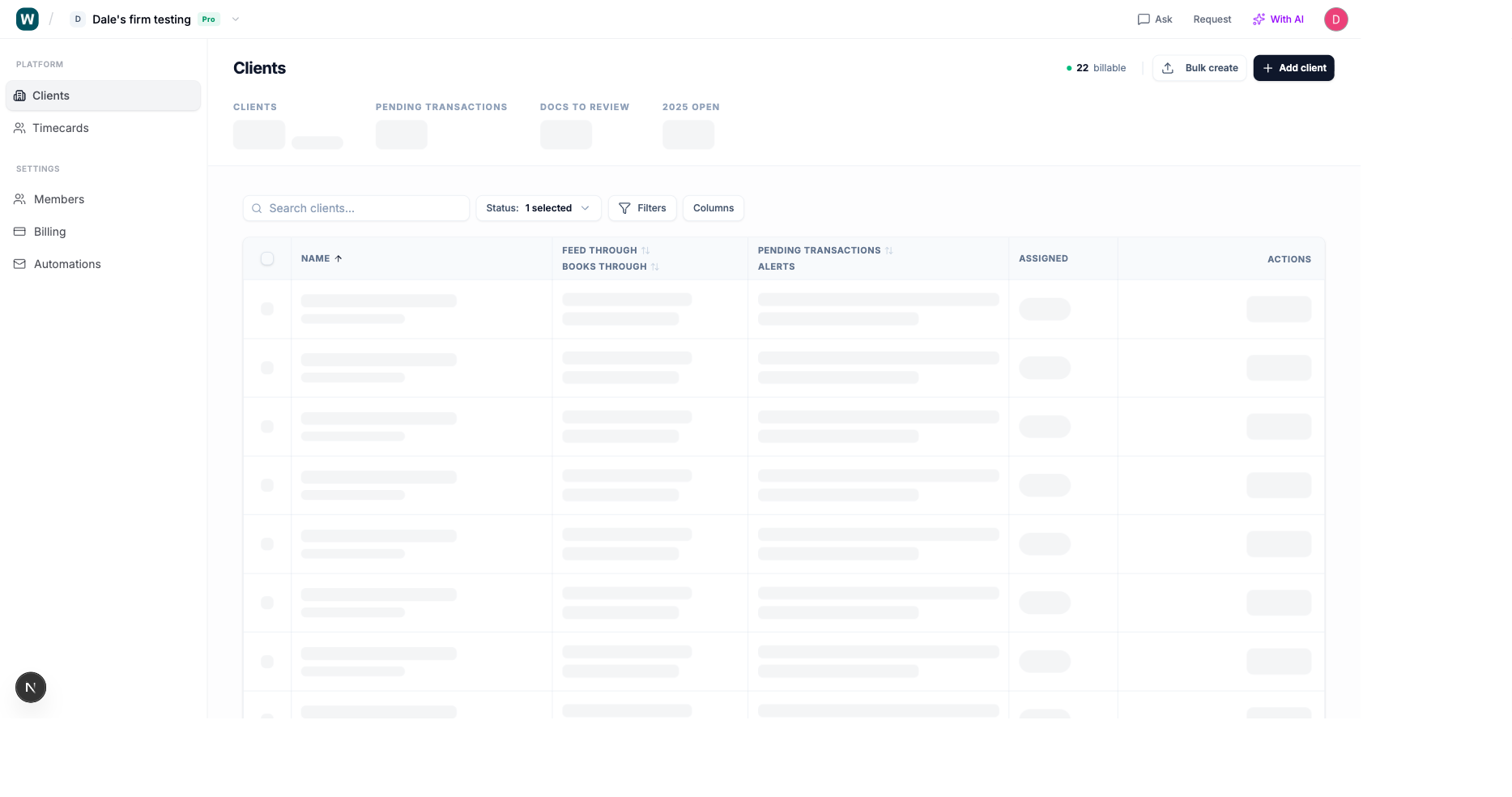
This is where Wesley changes the conversation. Instead of treating every client as equally urgent, the firm can see pending transaction pressure, document review load, and assignment context in one place. That makes it easier to decide whether the problem is truly staffing or whether the problem is backlog allocation.
Step 2: automate the bookkeeping work that should not require staff time every month
One reason accounting firms struggle with staffing shortages is that experienced reviewers are often still spending time on repeatable bookkeeping judgment.
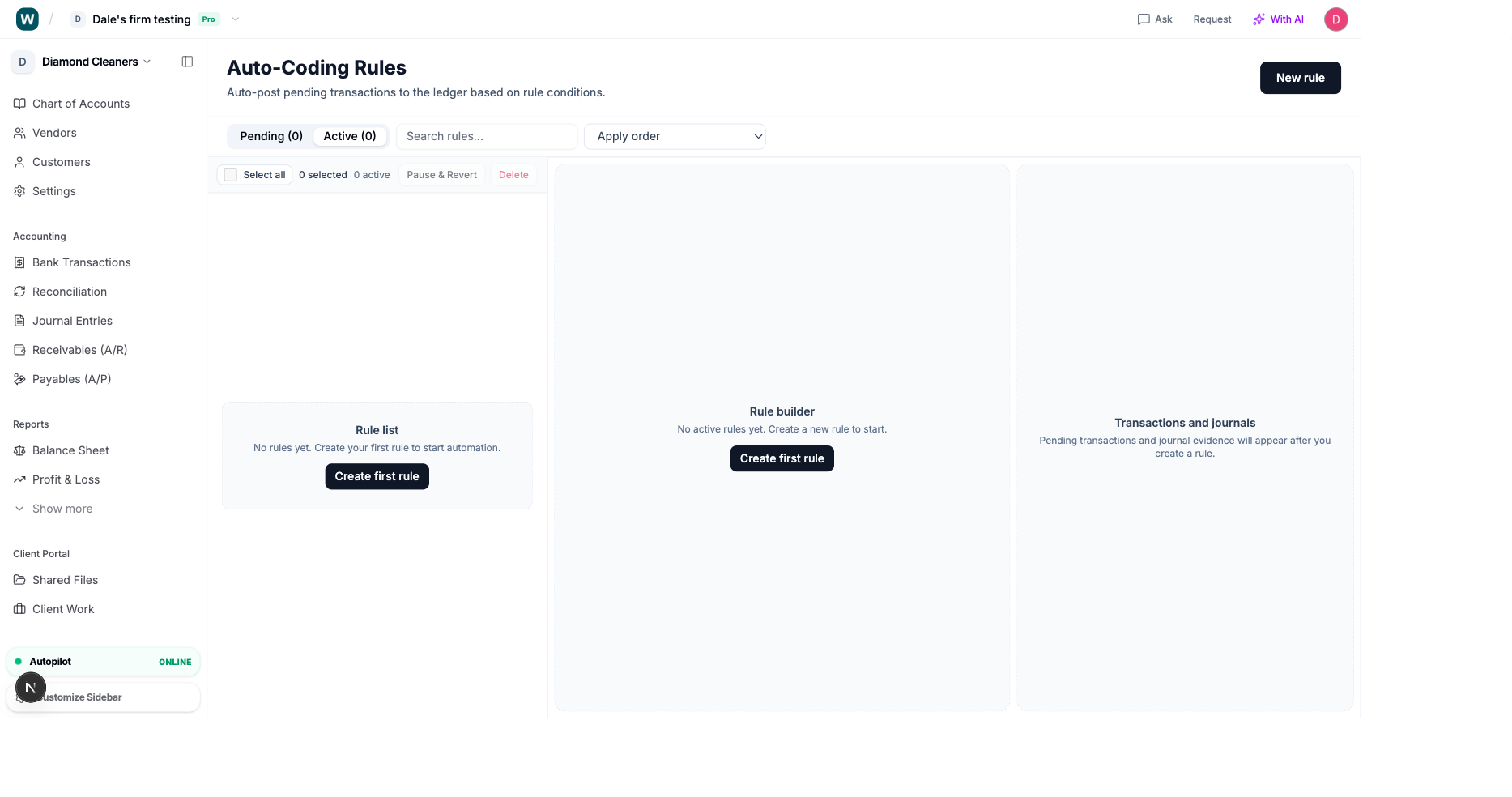
With Wesley, firms can build bookkeeping automation around recurring transaction patterns instead of redoing the same categorization logic client by client and month by month. That does not eliminate human review. It removes routine work from the most expensive people on the team.
If you are trying to increase accounting firm capacity without hiring, this is one of the first places to look. Every repeatable transaction that does not need to be manually touched is capacity you can reallocate to exceptions, review, and client communication.
Step 3: keep exception work in one queue so staff are not context switching all day
Automation alone is not enough if the unresolved work still lives in too many places.
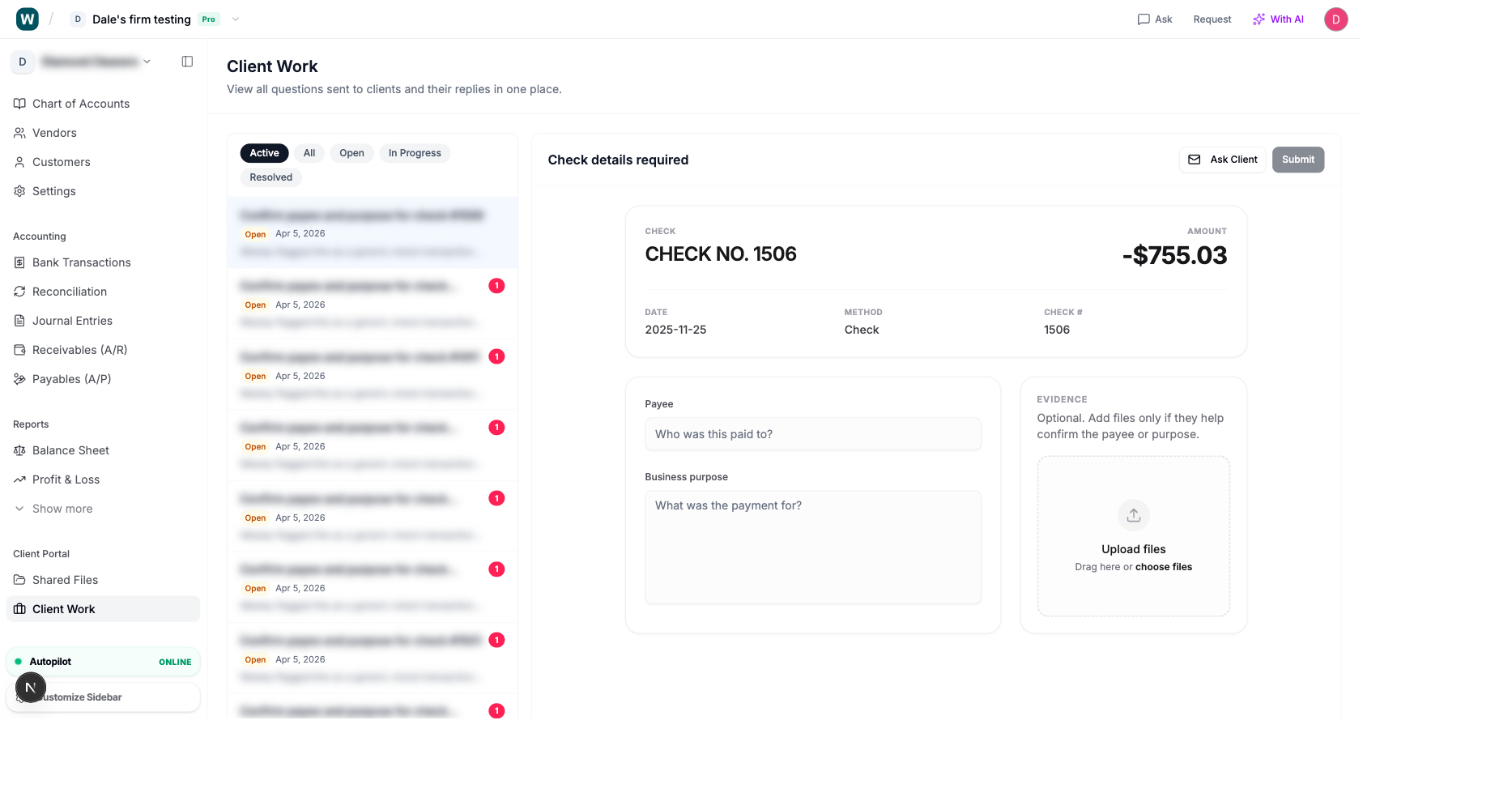
Wesley helps firms keep the remaining exception work tied to the client and transaction context. That matters because a staffing shortage gets worse when every unanswered question turns into another side channel. A clean work queue lets the team move faster even when the team is lean.
How this helps firms grow without immediately adding headcount
A short-staffed accounting firm usually does not need magic. It needs leverage.
That leverage often comes from three changes:
- seeing capacity pressure across clients before the backlog becomes a fire drill
- automating recurring bookkeeping decisions that should not consume reviewer time
- keeping unresolved client work inside the bookkeeping workflow instead of outside it
That is where Wesley fits. It helps firms increase capacity without hiring by reducing the amount of work that actually needs human attention.
FAQ: staffing shortage and capacity for accounting firms
Can software really help a short-staffed accounting firm?
Yes, if the software reduces repetitive bookkeeping work and makes the remaining review work easier to route. Wesley is designed for that exact operational problem.
What should accounting firms automate first when they are understaffed?
The best starting point is high-volume recurring transaction categorization and the follow-up workflow around unresolved items. That is usually where staffing pressure becomes visible first.
How do accounting firms scale without hiring too early?
They first tighten visibility, automate routine bookkeeping, and centralize exception work. Once that structure is in place, the firm can see whether the real constraint is headcount or process.
Final takeaway
If your firm feels short-staffed, the first question should not always be who to hire next. The first question should be where current capacity is being wasted.
That is why Wesley is a strong fit for firms dealing with accounting staff shortages, bookkeeping backlogs, and growth pressure. It helps you see the work, automate the routine parts, and keep the true exceptions moving.
Build a calmer filing workflow
Keep contractor docs, payment exceptions, and follow-ups tied to the actual work
Wesley is strongest when the filing problem is really a workflow problem: missing documents, unclear payment channels, and last-minute cleanup before you can trust the numbers.
Related reads
Discover adjacent articles without being sent to near-duplicate topics.