Seasonal Staff for Accounting Firms: How to Add Tax Season Capacity Without Losing Client Access Control

Tax season usually does not break an accounting firm because demand appears out of nowhere. It breaks the firm because overflow capacity arrives with operational risk.
That is why firms search for terms like seasonal staff for accounting firms, tax season staffing for CPA firms, outsourced accounting team, and temporary bookkeeping support. The real question is not just how to add people. The real question is how to add people without creating client access chaos, unclear responsibility, or messy handoffs.
Wesley is helpful here because it gives firms a cleaner structure for adding internal teammates, outsourced support, or seasonal staff while keeping client ownership and access visible.
Why seasonal staff create process risk during tax season
When a firm adds temporary capacity, three problems show up quickly:
- no one is fully sure who should have access to which clients
- overflow staff get invited broadly because narrowing access feels too slow
- client ownership becomes fuzzy once multiple people start touching the same books
That is how a tax season staffing decision turns into an operations problem. The firm gets more hands, but less control.
Choose your workflow
Tax workflow hub
The full cluster for W-9 collection, 1099 review, and filing-season cleanup workflows.
Collect a W-9 before filing a 1099
The cleanest timing and follow-up workflow before filing season turns reactive.
1099-K vs 1099-NEC
How to separate processor-reported payments from contractor compensation.
Why a contractor is missing from your QuickBooks 1099
A practical troubleshooting flow for inactive vendors, thresholds, and mapping issues.
Why credit card payments do not show up on 1099s
The exact reporting logic behind excluded card and payment-app transactions.
Coverage and resources
Open the authority pages that support this workflow.
Client Document Request Template for Bookkeeping Firms
A reusable client document request template for bookkeepers and accounting firms who need statements, receipts, and exception support without a vague back-and-forth.
Open page →
Uncategorized Transaction Follow-Up Template
A clean follow-up template for asking clients about uncategorized transactions, owner activity, unusual transfers, and missing memo detail without wasting reviewer time.
Open page →
Template library
Browse copyable SOPs, client messages, and bookkeeping checklists.
Open page →
Step 1: separate firm members from extended or seasonal support
A clean staffing model starts by treating internal staff and external overflow help differently.
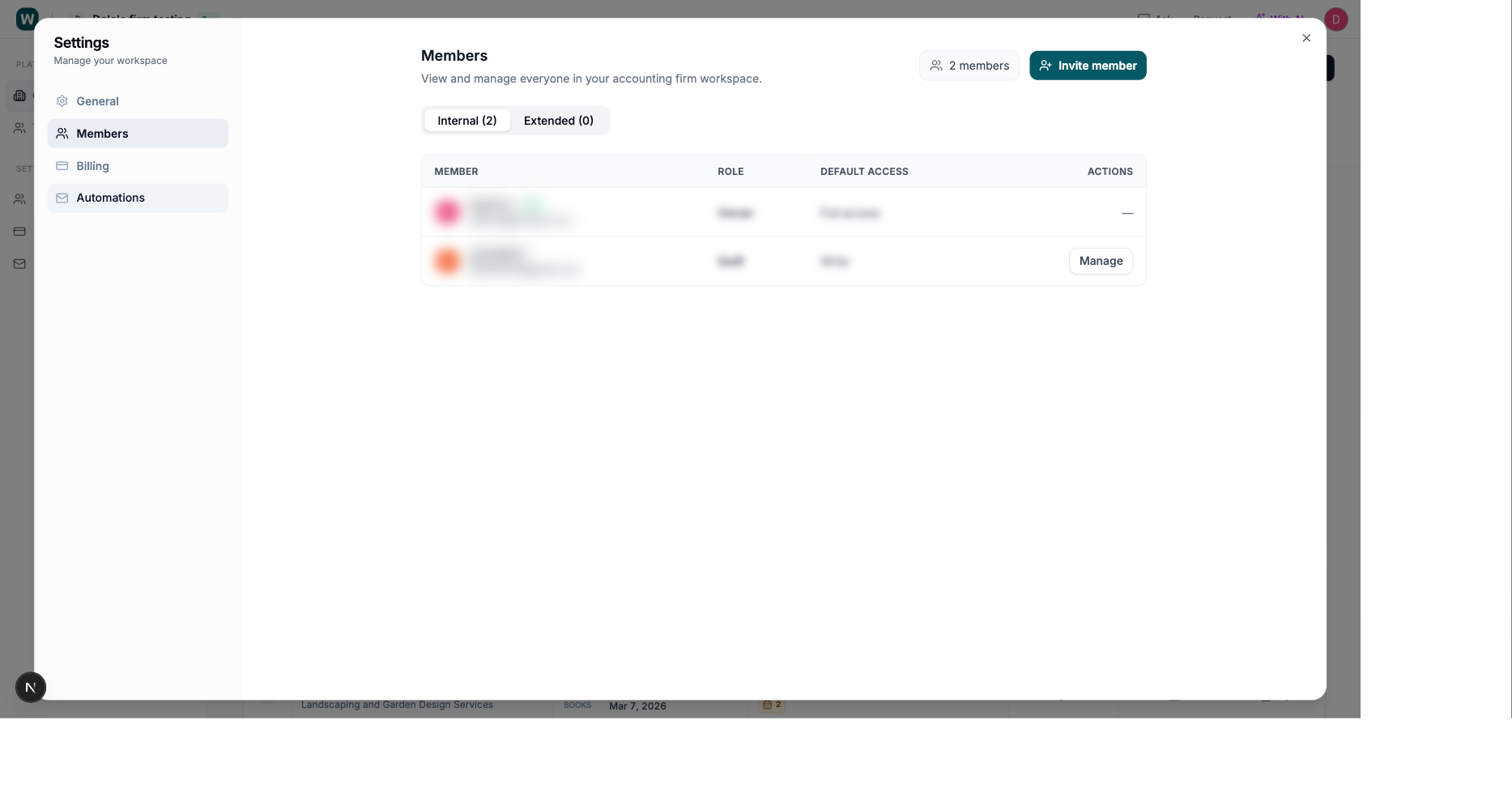
In Wesley, the firm can manage members from one place instead of improvising access rules client by client. That is important during busy season because the operational model needs to stay legible even when the team changes quickly.
Step 2: invite seasonal or outsourced staff with the right default access model
Temporary capacity should not mean permanent overexposure.
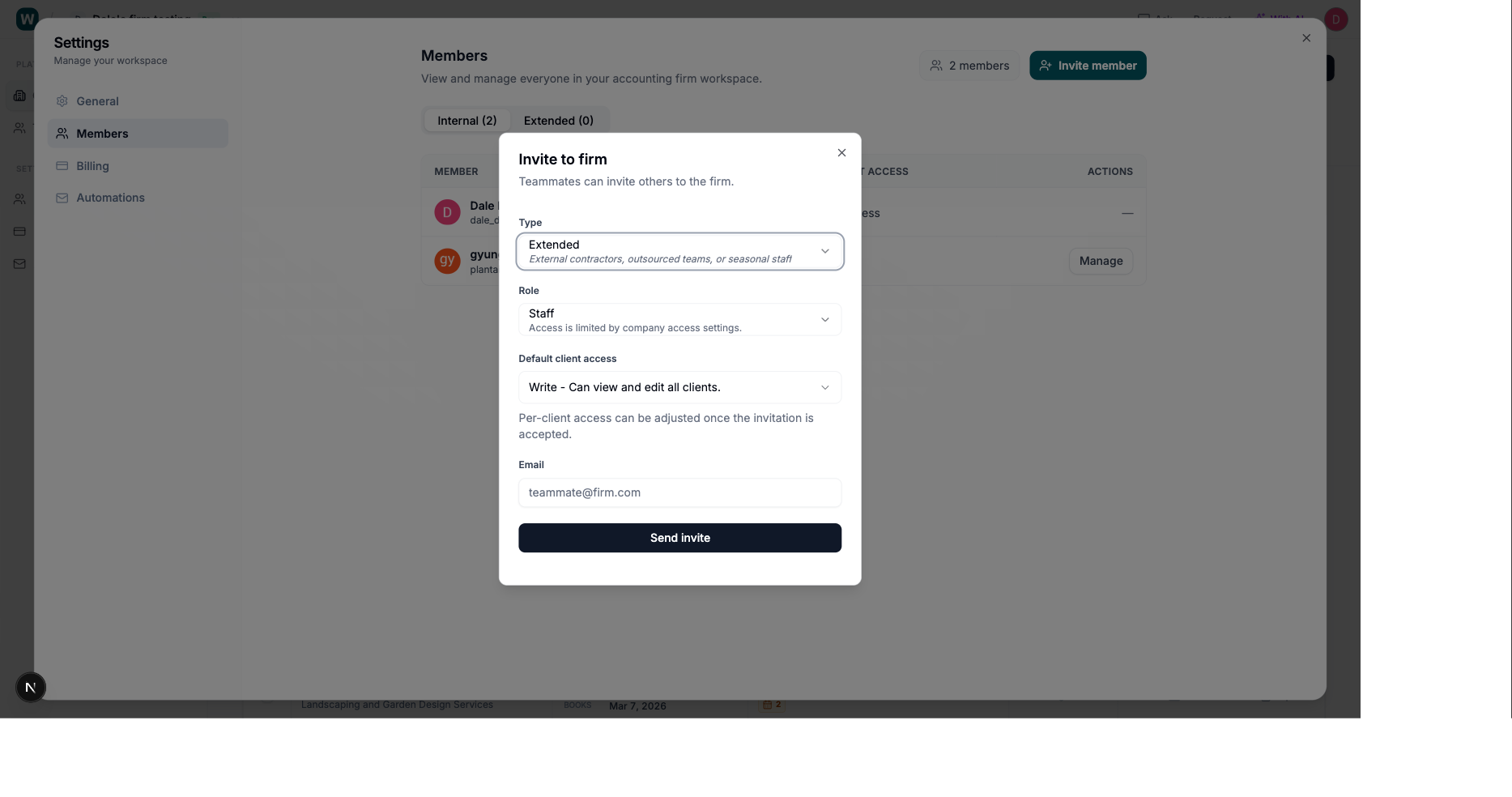
This is one of the strongest parts of Wesley for firms managing seasonal staff during tax season. The invite flow explicitly supports extended members such as external contractors, outsourced teams, or seasonal staff, and it pairs that with role and default client access decisions up front.
That matters because rushed staffing usually goes wrong when access is handled as an afterthought.
Step 3: assign people to the clients they should actually own
Even with the right invite model, staffing gets messy if client responsibility stays vague.
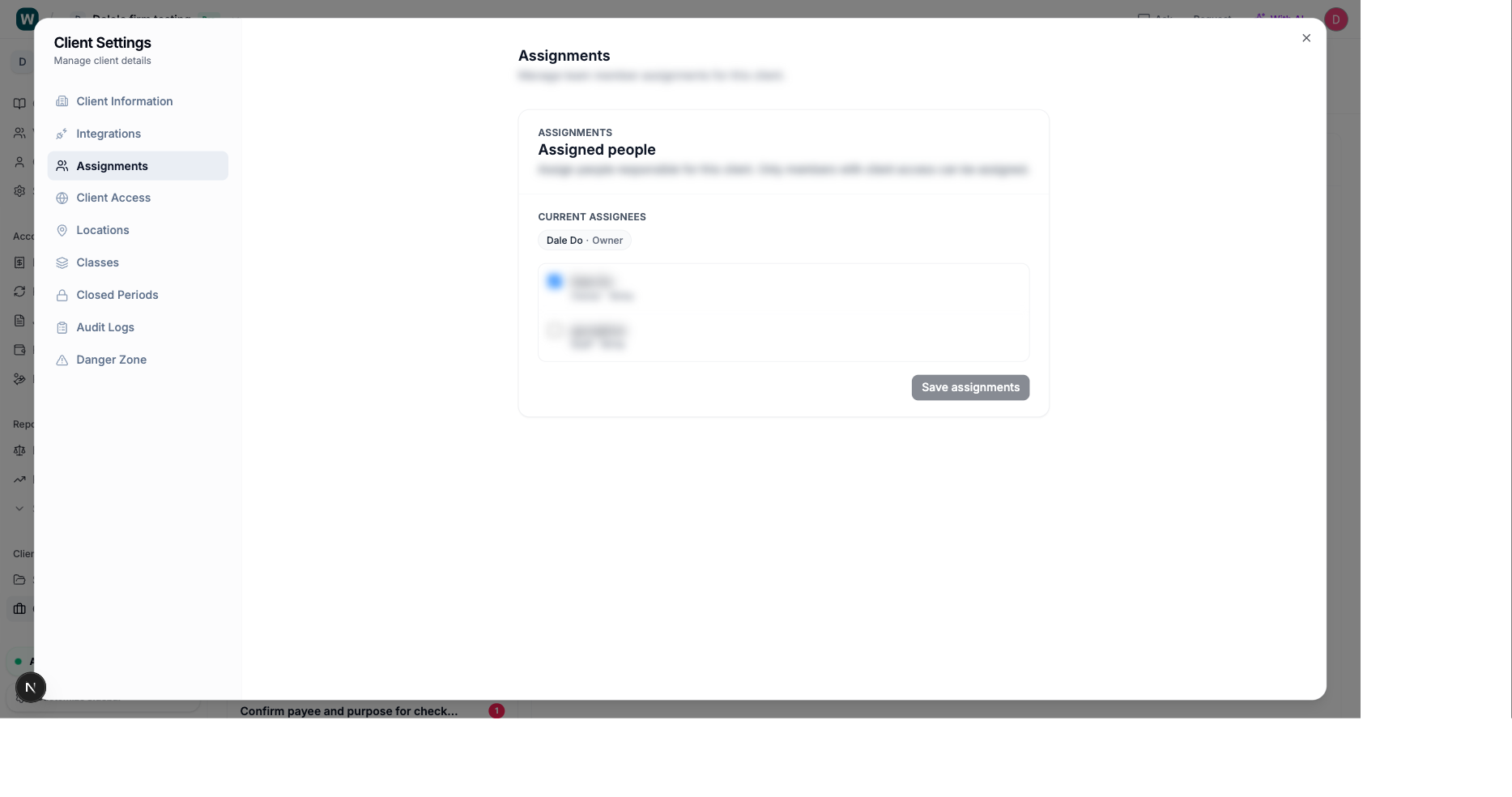
Wesley lets firms keep assignments tied to the client workflow, so temporary help is not just “on the team” in the abstract. They are tied to the clients they are expected to handle. That improves accountability and reduces the confusion that usually follows tax-season handoffs.
What this changes for accounting firms during busy season
A better tax season staffing workflow creates leverage in a few ways:
- partners can add overflow capacity faster without opening every client to every temporary worker
- outsourced bookkeeping support can be onboarded with clearer boundaries
- client ownership stays visible, even when multiple people are helping during peak workload
- firms reduce the risk that seasonal support turns into access sprawl after the deadline passes
That is the kind of control firms need when they are trying to add tax season capacity without increasing operational mess.
FAQ: seasonal staff and outsourced teams for accounting firms
How do accounting firms onboard seasonal staff without losing control?
They separate internal and extended members, set a default access level before work begins, and assign temporary workers only to the clients they should touch. Wesley is designed to support that structure.
What is the safest way to use outsourced bookkeeping support during tax season?
The safest model is role-based access plus explicit client assignment. That way, overflow support can contribute without broad, undefined access across the entire firm.
Why do temporary accounting staff create problems even when they help capacity?
Because capacity is only half the issue. The other half is permissions, ownership, and handoff clarity. If those are weak, the firm gains labor but loses operational control.
Final takeaway
Seasonal staff can absolutely help an accounting firm survive tax season. But firms that add people without a clear access and assignment model usually create a second problem while solving the first.
That is why Wesley is a strong fit for tax season staffing, outsourced accounting support, and firms that need overflow capacity without losing client access control.
Build a calmer filing workflow
Keep contractor docs, payment exceptions, and follow-ups tied to the actual work
Wesley is strongest when the filing problem is really a workflow problem: missing documents, unclear payment channels, and last-minute cleanup before you can trust the numbers.
Related reads
Discover adjacent articles without being sent to near-duplicate topics.