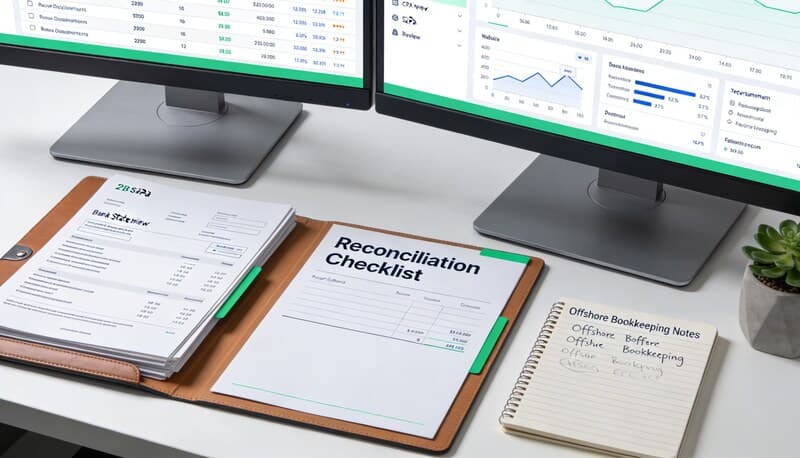
Month-End Close Review Checklist for Accounting Firms
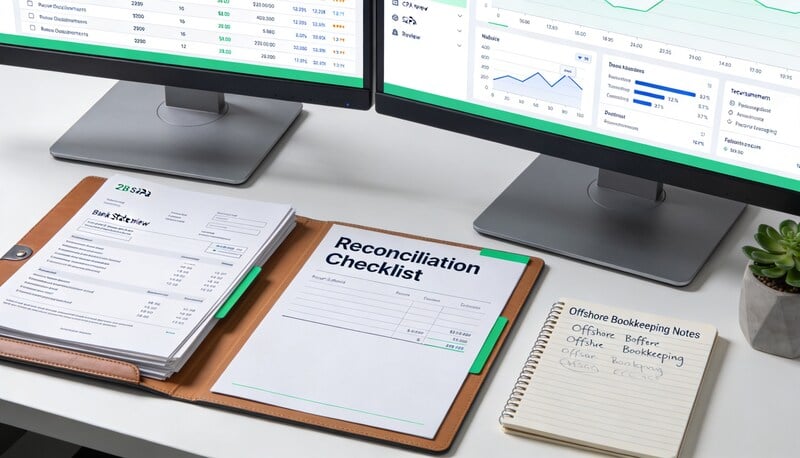
A month-end close checklist should separate work completion from review readiness. For accounting firms, the bottleneck is often not the number of tasks. It is the number of tasks that arrive at review with missing context.
Quick answer
A strong month-end close review checklist covers source completeness, bank and credit card reconciliation, revenue and payout review, payroll, loans, accruals if applicable, uncategorized transactions, client questions, and reviewer sign-off.
Choose your workflow
Tax workflow hub
The full cluster for W-9 collection, 1099 review, and filing-season cleanup workflows.
Collect a W-9 before filing a 1099
The cleanest timing and follow-up workflow before filing season turns reactive.
1099-K vs 1099-NEC
How to separate processor-reported payments from contractor compensation.
Why a contractor is missing from your QuickBooks 1099
A practical troubleshooting flow for inactive vendors, thresholds, and mapping issues.
Why credit card payments do not show up on 1099s
The exact reporting logic behind excluded card and payment-app transactions.
Coverage and resources
Open the authority pages that support this workflow.
Month-End Close Request Checklist for Accounting Firms
A practical month-end close request checklist you can send to clients so statements, loan docs, payroll reports, and exception support arrive before the close starts.
Open page →
Bank Statement Cleanup SOP for Bookkeepers
A bank statement cleanup SOP for bookkeepers who need a repeatable review process before exporting to QuickBooks, Xero, QIF, or spreadsheet workflows.
Open page →
Who this is for
This is for CPA firms and CAS teams managing recurring monthly clients across preparers, reviewers, managers, and client contacts.
The operating problem
Close checklists become weak when they only track whether a task was touched. A reviewer needs to know whether the task is ready, what exceptions remain, and whether the client is blocking the close.
The workflow
Run the checklist in three passes: source readiness, workpaper readiness, and reviewer readiness.
- Confirm all recurring source documents and integrations are present.
- Complete reconciliations for bank, credit card, loan, payroll, and clearing accounts in scope.
- Review transaction coding for unusual vendors, uncategorized items, and balance sheet movement.
- Send consolidated client questions as early as possible.
- Record unresolved exceptions separately from completed tasks.
- Route only review-ready sections to senior reviewers.
- Close the month with notes that improve next month's checklist.
Checklist
- All expected bank and credit card statements are received.
- Bank feed sync gaps and manual imports are reviewed.
- Payroll, loan, and merchant processor activity tie to source reports.
- Uncategorized transactions are assigned or routed for client context.
- Balance sheet accounts have movement explanations.
- Prior-month review notes are resolved or carried forward intentionally.
- Client questions are batched in one request.
- Reviewer approval is documented before reporting.
What to document before handoff
- Close period and reporting deadline.
- Completed work by area.
- Open exceptions by owner.
- Client questions and response status.
- Reviewer decisions needed.
- Known carryforward items for next month.
Review signals that matter
- The checklist shows blocked work separately from incomplete work.
- Reviewers are not surprised by missing statements.
- Client question volume is visible before the deadline.
- Reporting delays can be traced to a specific blocker.
- The checklist gets shorter as recurring issues become rules or SOPs.
Where Wesley fits
Wesley helps firms connect month-end checklist work to the underlying documents and transaction questions. Start with Wesley for accounting firms if your close problem is coordination across preparers, reviewers, and clients.
FAQ
How long should a month-end close checklist be?
Long enough to catch recurring risk, short enough that teams actually use it. Most firms need a standard core checklist plus client-specific additions.
What should be reviewed first?
Review source completeness and cash reconciliations first. Everything else is weaker if the cash position is not trusted.
Should client questions live inside the close checklist?
They should be connected to it. Client questions often determine whether a task is truly ready for review.
Build a calmer filing workflow
Keep contractor docs, payment exceptions, and follow-ups tied to the actual work
Wesley is strongest when the filing problem is really a workflow problem: missing documents, unclear payment channels, and last-minute cleanup before you can trust the numbers.
Related reads
Discover adjacent articles without being sent to near-duplicate topics.