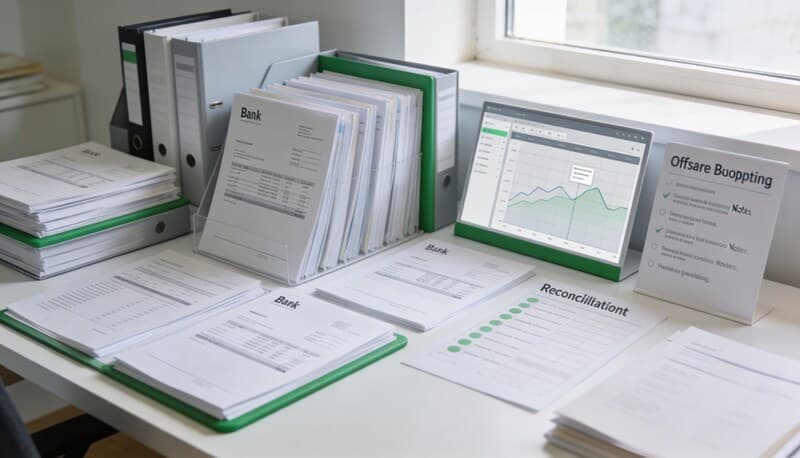
Close-Readiness Workflow in 2026

Close-readiness workflow is a more useful phrase than month-end acceleration for one reason:
it forces teams to ask whether the work is actually ready before close control software starts tracking it.
That is where a lot of late close pain begins.
Quick decision snapshot
Start here.
| If your team mainly needs... | Better starting point |
|---|---|
| Stronger close control, checklists, and central visibility | Numeric |
| Better recurring workflow coordination across the practice | Karbon |
| A path to make source-heavy work reviewer-ready before close | Wesley |
What to stop treating as one layer
- Close readiness is not the same as close management.
- Close readiness is not the same as reconciliation.
- Better task visibility does not guarantee better upstream work quality.
Coverage and resources
Open the authority pages that support this workflow.
Month-End Close Request Checklist for Accounting Firms
A practical month-end close request checklist you can send to clients so statements, loan docs, payroll reports, and exception support arrive before the close starts.
Open page →
Bank Statement Cleanup SOP for Bookkeepers
A bank statement cleanup SOP for bookkeepers who need a repeatable review process before exporting to QuickBooks, Xero, QIF, or spreadsheet workflows.
Open page →
What close readiness actually means
Close readiness means the work arriving at month-end is:
- complete enough to review
- trustworthy enough to move forward
- documented enough that the reviewer is not rebuilding context from scratch
That usually depends on upstream work like:
- statement cleanup
- exception resolution
- supporting-document review
- follow-up staying attached to the same work item
If those are weak, the close can be visible and still stay late.
What Numeric is best at
Numeric's public close-management positioning is explicit about:
- centralized close workspaces
- account reconciliations
- automation around close tasks
- AI surfacing what needs attention before it slows the close
That makes it strong when the issue is the close operating layer itself.
If your team already trusts the inputs and needs stronger control of month-end, Numeric is a clean fit.
What Karbon is best at
Karbon is stronger when the issue is broader recurring workflow coordination across the practice.
Its value is clearer when the team needs:
- better ownership
- cleaner workflows
- more operational consistency
That is a different layer from close readiness specifically.
The readiness gap many teams still ignore
A lot of teams measure:
- days to close
- tasks completed
- reconciliations submitted
They do not measure:
- how much cleanup still happened just before close
- how many questions were still unresolved
- how much reviewer time was spent reconstructing context
That is why close-readiness workflow matters.
It focuses on the work before the close formally begins.
Where Wesley fits
Wesley is strongest when close readiness depends on source-heavy accounting work still needing:
- cleanup
- review comments
- exception handling
- follow-up continuity
This is especially relevant when the bottleneck is not the close dashboard, but the quality and readiness of the work feeding it.
The comparison table
| Category | Best for | Strong when... | Main gap |
|---|---|---|---|
| Close management software | Running the close with structure and control | The problem is close pacing, visibility, and governance | It does not automatically create readiness upstream |
| Practice workflow software | Coordinating recurring work across the firm | The problem is operational consistency across teams | It can stay too abstract for source-level readiness work |
| Workflow-attached readiness system | Making upstream work truly ready before close | The problem is cleanup, trust, and continuity | It is not a full close-management suite |
When Numeric is the right answer
Choose Numeric when:
- month-end control and visibility are the clear bottlenecks
- the main problem lives inside the close operating layer
When Karbon is the right answer
Choose Karbon when:
- the larger issue is recurring workflow coordination across the practice
- close-readiness problems sit inside a broader operations issue
When Wesley is the right answer
Choose Wesley when:
- your team still does too much trust-building right before close
- source-heavy work arrives late or fragmented
- follow-up and review comments should stay tied to the same work item
A better diagnostic test
Use these questions.
| Question | If yes... |
|---|---|
| Is our main pain that the close itself lacks visibility or control? | Start with Numeric |
| Is our main pain recurring workflow coordination across jobs and owners? | Start with Karbon |
| Is our main pain that work still is not truly ready when the close begins? | Compare Wesley |
Common mistakes
1. Treating readiness as a checklist problem only
A checklist can track work that still is not actually ready.
2. Expecting reconciliation tooling to solve upstream trust issues
That shifts cleanup into the wrong stage.
3. Measuring close speed without measuring pre-close rework
You end up optimizing the wrong layer.
FAQ
What is a close-readiness workflow?
It is the process that ensures accounting work is complete, trustworthy, and reviewable before it enters formal month-end close.
Is close readiness the same as close management?
No. Close readiness happens earlier. Close management governs the close once that work enters the month-end cycle.
When should a team compare Wesley for close readiness?
When source-heavy work still needs cleanup, comments, and follow-up before it can enter close cleanly.
Final takeaway
The best close-readiness workflow depends on where month-end still breaks:
- inside the close
- inside recurring operations
- or before the close officially starts
That distinction is what keeps the software decision honest.
Try Wesley next
See whether this workflow fits your books
Book a demo, review the workflow with Wesley, and evaluate the fit before asking your team to change how they work.
Related reads
Discover adjacent articles without being sent to near-duplicate topics.