Catch-Up Bookkeeping Workflow: How to Clean Up a Backlog Without Rebuilding the Books

Catch-up bookkeeping gets expensive when firms rebuild the books from scratch every time a client shows up with a backlog. The better workflow is to start with the source documents you actually have, build the chart of accounts around that reality, and clear the work in a structured order.
That is where Wesley is strong. Instead of turning a backlog into an open-ended cleanup project, it helps firms move from bank statements to a tax-ready bookkeeping structure much faster.
If you are searching for a catch-up bookkeeping workflow, year-end cleanup process, or a better way to clean up messy books without rebuilding everything manually, this is the practical sequence to follow.
What usually goes wrong in catch-up bookkeeping
When a client arrives with months of missing bookkeeping, most firms lose time in three places:
- the account structure is inconsistent or not tax-reporting-friendly
- transaction categorization starts before the chart of accounts is stable
- reviewers spend too much time chasing missing details before the obvious work is done
That is why catch-up bookkeeping drags. The team is trying to solve setup, categorization, review, and client follow-up all at once.
Wesley is useful because it turns that into a sequence instead of a pile.
Coverage and resources
Open the authority pages that support this workflow.
Supported banks
See which institutions Wesley already covers and when statement fallback still matters.
Open page →
Integrations hub
See where Wesley fits before QuickBooks, Xero, QIF, Sage, and NetSuite workflows.
Open page →
Template library
Use saveable SOPs and checklists alongside the workflow pages.
Open page →
Step 1: start the backlog in the right workspace
The first move is not to rebuild the ledger by hand. It is to open the client in a workflow built for bookkeeping cleanup.
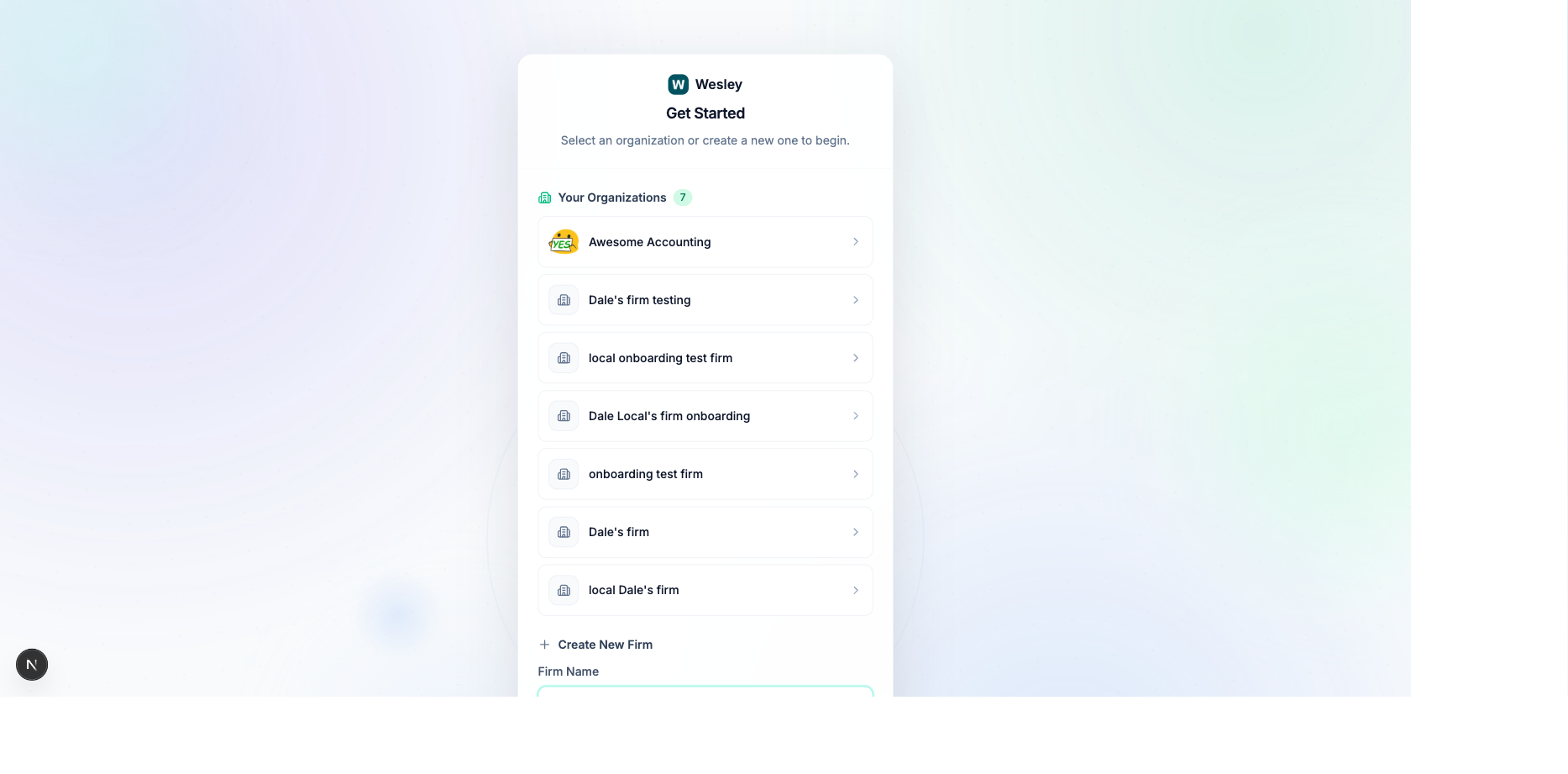
With Wesley, the point is to give the team one place to move from intake to categorization to review, instead of spreading catch-up bookkeeping across disconnected tools.
Step 2: let the system set up the bookkeeping structure from the bank data
One of the biggest mistakes in backlog cleanup is forcing a generic chart of accounts before the real transaction patterns are visible.
Wesley is designed for bank-statement-first bookkeeping. Once the data is uploaded, it can help establish a chart of accounts that is much closer to how the client actually operates and how the books will ultimately need to be reviewed for tax reporting.
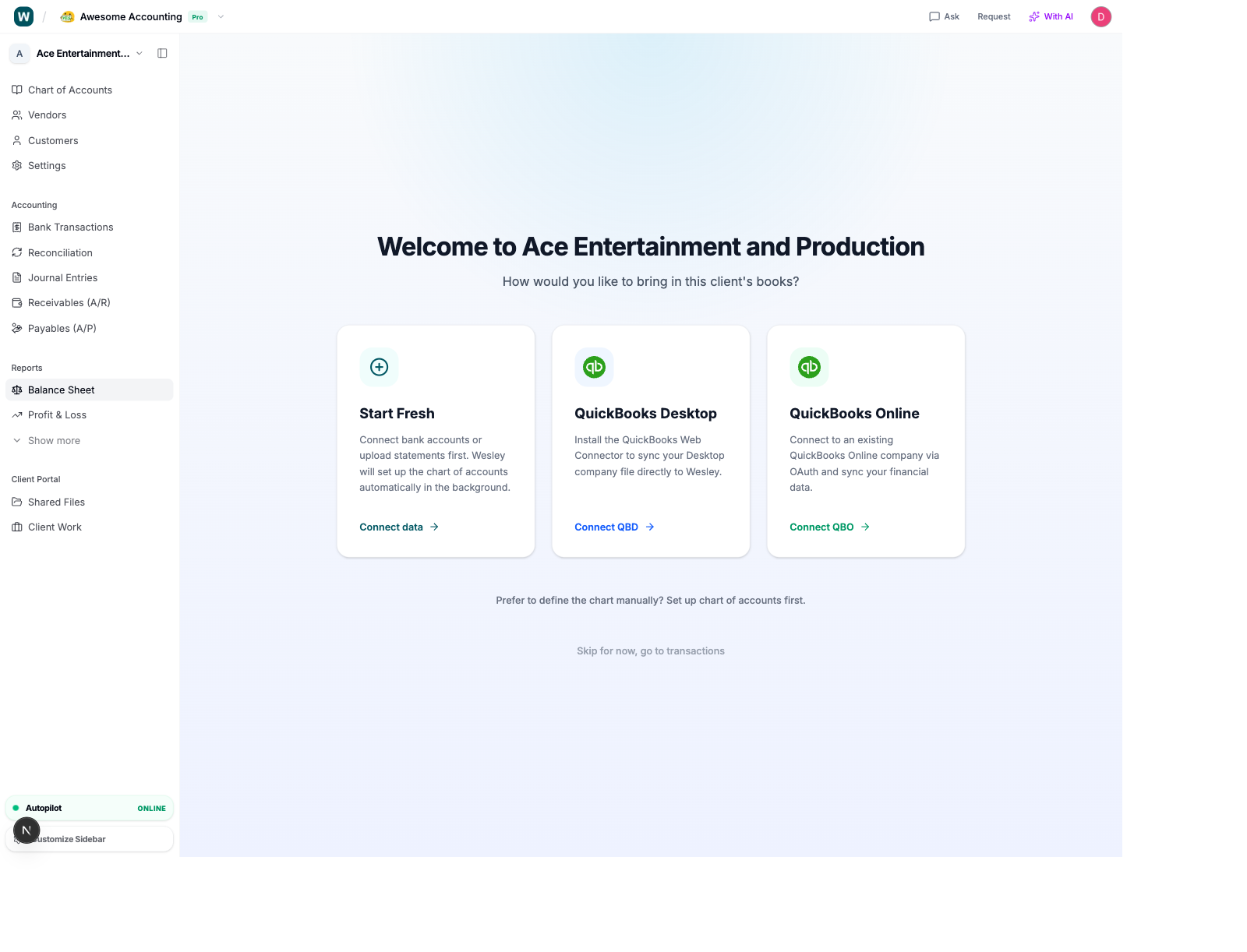
That matters because the faster the account structure is stable, the faster the rest of catch-up bookkeeping becomes consistent.
Step 3: clean up the chart of accounts before you over-review transactions
A backlog is easier to clear when the destination is clear. If the chart of accounts is messy, reviewers will keep second-guessing categorization decisions all the way through the project.
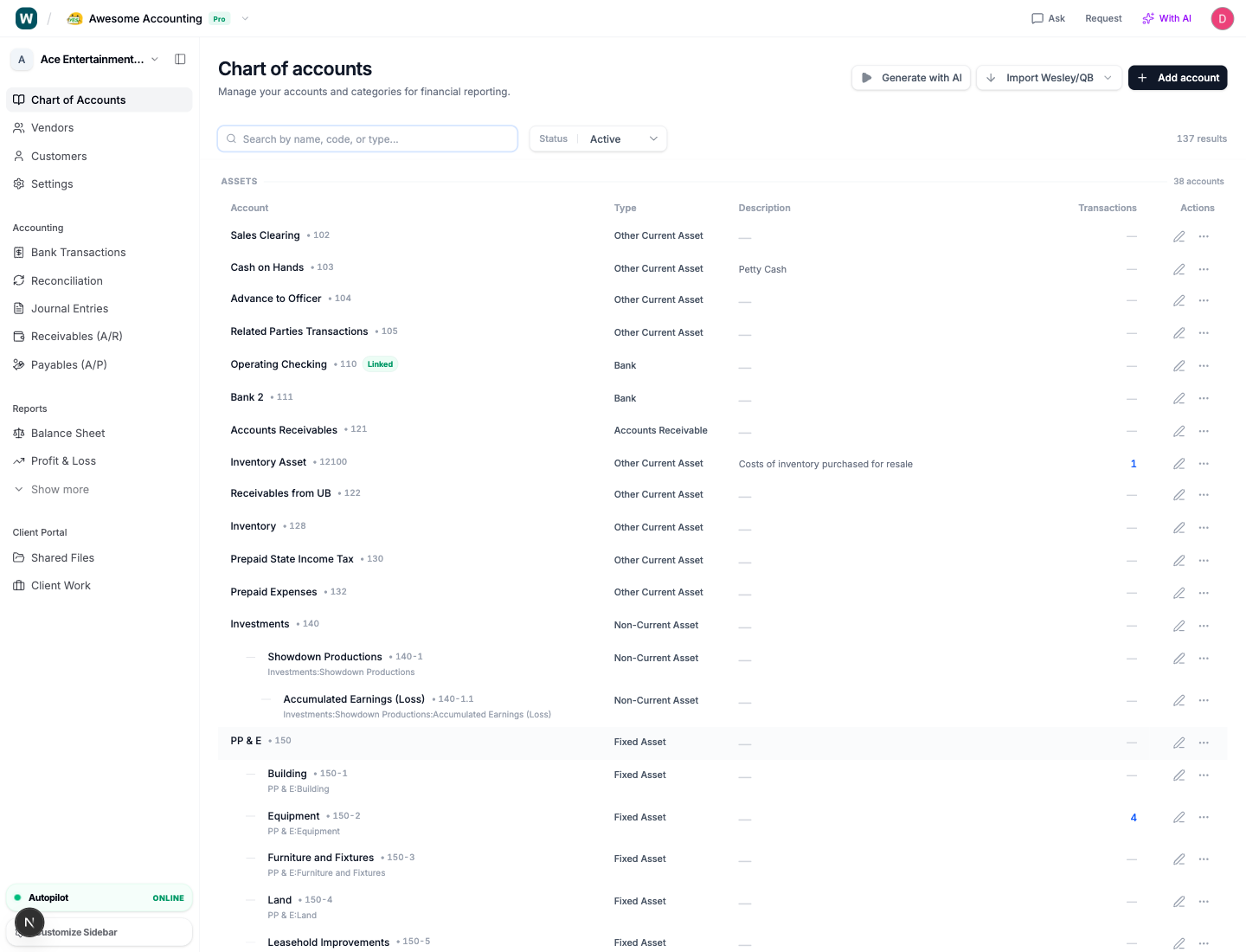
In Wesley, the chart of accounts is not an afterthought. It is part of the engine that helps firms categorize transactions consistently and prepare books in a way that is easier to review later.
Step 4: let the obvious transactions flow through, isolate the ambiguous ones
Once the structure is in place, the leverage comes from not treating every transaction like a fresh puzzle.
Wesley can categorize a large share of recognizable transactions consistently, which means your team does not have to burn time on every recurring debit card swipe, software subscription, or predictable operating expense. The ambiguous items are the ones that should stay visible.
That is also where the workflow stays practical. If the reviewer already knows what a transaction is, they can resolve it directly. If supporting information is missing, Wesley can keep the request process structured so the team is not chasing details manually across inboxes and loose notes.
Why this is faster than rebuilding the books manually
A strong catch-up bookkeeping system does four things well:
- it starts from the documents the client can actually provide
- it creates a more tax-ready chart of accounts early
- it keeps categorization consistent across the backlog
- it isolates only the transactions that truly need judgment or missing data
That is why Wesley helps firms clean up backlogs faster without turning every cleanup into a full reconstruction project.
Final takeaway
If your current catch-up bookkeeping process still feels like rebuilding a client file from zero, the workflow is too manual.
The faster approach is to begin with the bank statements, let the bookkeeping engine establish the right structure, push through the transactions that are already knowable, and reserve human review for the exceptions.
That is the value of Wesley. It gives accounting firms a repeatable way to clean up a backlog without rebuilding the books from scratch.
Want faster review loops?
Test AI-assisted categorization without losing reviewer control
Use Wesley to surface suggested accounts, confidence signals, and manual overrides in one place so your team can move faster without blind posting.
Related reads
Discover adjacent articles without being sent to near-duplicate topics.

Catch-Up Bookkeeping for Tax Season: Turn 12 Months of Bank Statements Into a Profit and Loss and Balance Sheet in 1 Hour

Best Tax Workflow Software for CPA Firms in 2026: Practice Workflow, Client Gather, and Work That Starts After Intake
