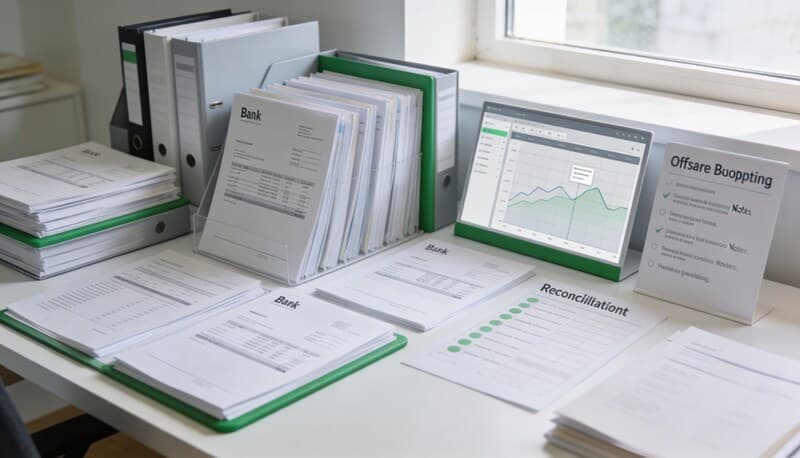
CAS Delivery Operating Model in 2026

A CAS delivery operating model is not just a staffing plan with nicer language.
It is the combination of:
- who owns the work
- how recurring work is coordinated
- how much manual review and cleanup still sits inside each cycle
If those are not separated, firms scale confusion instead of capacity.
Quick decision snapshot
Start here.
| If your team mainly needs... | Better starting point |
|---|---|
| External delivery leverage for CAS work | Botkeeper |
| Better recurring coordination across owners and workflows | Karbon |
| Better throughput on source-heavy CAS execution while keeping ownership in-house | Wesley |
What to stop treating as one model
- Delivery leverage is not the same as workflow coordination.
- Workflow coordination is not the same as throughput design.
- Throughput design is not the same as staffing.
Choose your workflow
Tax workflow hub
The full cluster for W-9 collection, 1099 review, and filing-season cleanup workflows.
Collect a W-9 before filing a 1099
The cleanest timing and follow-up workflow before filing season turns reactive.
1099-K vs 1099-NEC
How to separate processor-reported payments from contractor compensation.
Why a contractor is missing from your QuickBooks 1099
A practical troubleshooting flow for inactive vendors, thresholds, and mapping issues.
Why credit card payments do not show up on 1099s
The exact reporting logic behind excluded card and payment-app transactions.
Coverage and resources
Open the authority pages that support this workflow.
Supported banks
See which institutions Wesley already covers and when statement fallback still matters.
Open page →
Integrations hub
See where Wesley fits before QuickBooks, Xero, QIF, Sage, and NetSuite workflows.
Open page →
Template library
Use saveable SOPs and checklists alongside the workflow pages.
Open page →
What a useful CAS delivery model should answer
A real delivery model should answer:
- how work moves through each recurring client cycle
- where ownership changes hands
- where manual review still adds too many touches
- which part of growth should come from workflow versus leverage
If it cannot answer those, it is not really an operating model yet.
What Botkeeper is best at
Botkeeper's public positioning is explicit about providing accounting-firm capacity through:
- AI accounting automation
- scalability
- additional services when needed
That makes it strongest when the operating model should include external delivery leverage.
This is useful when the firm wants to scale faster without owning every unit of delivery itself.
What Karbon is best at
Karbon is stronger when the team needs:
- better recurring workflow coordination
- clearer ownership
- more consistent execution across the practice
That makes it more of an operating-system answer than a capacity answer.
The hidden design flaw many CAS teams still have
Some firms do not need a radically different staffing model first.
They need a better delivery design around:
- source-heavy review
- cleanup before the next stage
- follow-up that stays attached to the work item
- fewer context rebuilds between steps
If those still are weak, the operating model keeps producing too many touches per client cycle.
Where Wesley fits
Wesley is strongest when the delivery model should improve throughput by reducing drag in:
- statement-heavy work
- source-backed review
- attached follow-up before downstream accounting control
That matters when the firm wants to keep ownership of the work but stop compensating for weak execution design with more headcount alone.
The comparison table
| Lever | Best for | Strong when... | Main gap |
|---|---|---|---|
| External delivery leverage | Adding more CAS delivery support | The issue is real bandwidth and scale | It changes how work is owned and delivered |
| Operating-system coordination | Improving recurring process control | The issue is workflow discipline and ownership | It may not reduce enough source-level drag |
| Throughput design improvement | Reducing manual touches in execution | The issue is how heavy each cycle still is | It is not a full capacity or PM solution |
When Botkeeper is the right answer
Choose Botkeeper when:
- your delivery model should include external leverage
- the main growth constraint is service bandwidth
When Karbon is the right answer
Choose Karbon when:
- recurring coordination and ownership are the bigger bottlenecks
- your model needs a stronger operating system
When Wesley is the right answer
Choose Wesley when:
- your model still is too heavy at the source-work layer
- document-heavy review and follow-up still reduce throughput
- you want to keep delivery in-house
A better diagnostic test
Use these questions.
| Question | If yes... |
|---|---|
| Do we mainly need more delivery leverage? | Start with Botkeeper |
| Do we mainly need a cleaner recurring operating system? | Start with Karbon |
| Do we mainly need each cycle to require fewer manual touches? | Compare Wesley |
Common mistakes
1. Using headcount as the only model variable
That hides how heavy each engagement still is to deliver.
2. Using workflow tools to solve obvious bandwidth constraints
Sometimes the model really does need external leverage.
3. Scaling a workflow that still is too touch-heavy
That increases cost and complexity faster than margin.
FAQ
What is a CAS delivery operating model?
It is the structure that determines how recurring CAS work is owned, coordinated, and delivered at scale.
Is this mainly a staffing question?
No. It also is a workflow, throughput, and leverage question.
When is Wesley relevant to this decision?
When the delivery model should improve by reducing manual review, cleanup, and follow-up touches in source-heavy work.
Final takeaway
The best CAS delivery operating model separates:
- leverage
- coordination
- and throughput design
That separation is what keeps scaling from becoming expensive chaos.
Build a calmer filing workflow
Keep contractor docs, payment exceptions, and follow-ups tied to the actual work
Wesley is strongest when the filing problem is really a workflow problem: missing documents, unclear payment channels, and last-minute cleanup before you can trust the numbers.
Related reads
Discover adjacent articles without being sent to near-duplicate topics.