Bookkeeping Definition of Done for Bank Reconciliations

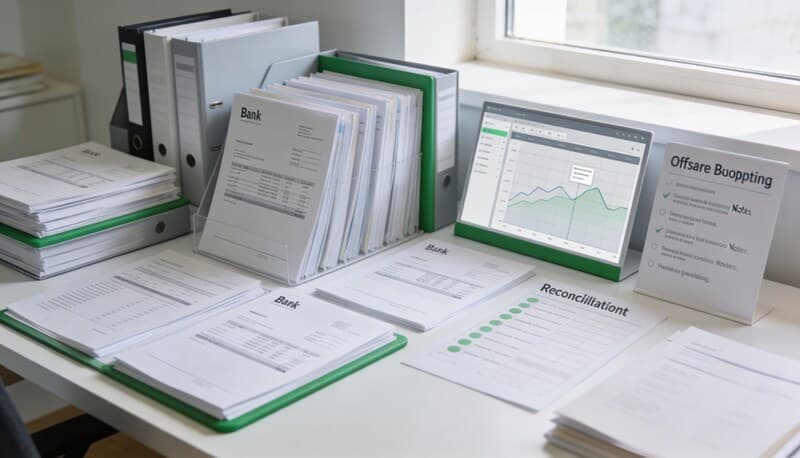
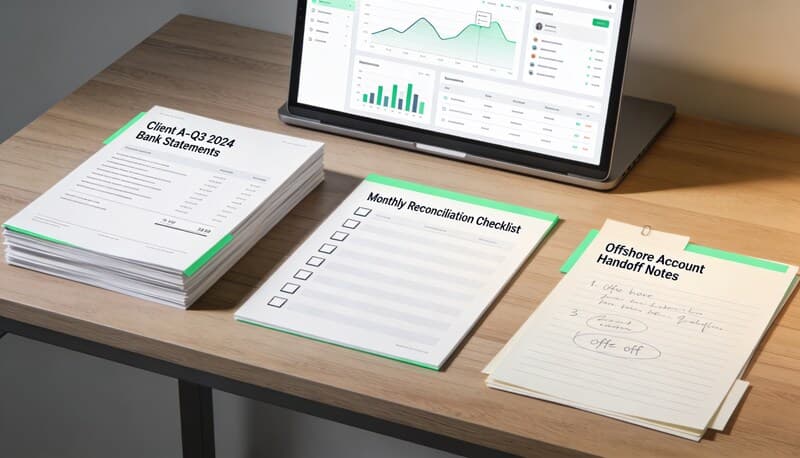
A bank reconciliation is not done just because the difference is zero. For a CPA firm, done means the balance ties, the source is complete, the exceptions are named, and the reviewer can understand the path from statement to books.
Quick answer
A reconciliation definition of done should include statement coverage, beginning balance agreement, ending balance agreement, cleared transaction review, unmatched item review, transfer matching, client question status, and reviewer sign-off.
Coverage and resources
Open the authority pages that support this workflow.
Supported banks
See which institutions have dedicated coverage pages and where statement fallback still makes sense.
Open page →
Supported statement types
See which source documents Wesley can clean up before export or import prep.
Open page →
Bank Statement Cleanup SOP for Bookkeepers
A bank statement cleanup SOP for bookkeepers who need a repeatable review process before exporting to QuickBooks, Xero, QIF, or spreadsheet workflows.
Open page →
Month-End Close Request Checklist for Accounting Firms
A practical month-end close request checklist you can send to clients so statements, loan docs, payroll reports, and exception support arrive before the close starts.
Open page →
Who this is for
Use this when bookkeepers, offshore preparers, and reviewers disagree about what it means for a reconciliation to be complete.
The operating problem
Zero difference can hide poor work. A preparer can force a balance, leave stale uncleared transactions, duplicate imports, or misclassify transfers. The definition of done needs to protect the reviewer from false completion.
The workflow
Use the definition of done as a gate before month-end review. A reconciliation should not move forward until each gate is either passed or clearly excepted.
- Confirm the statement period matches the bookkeeping period being reviewed.
- Tie the beginning balance to the prior reconciled ending balance.
- Tie the ending balance to the statement ending balance.
- Review uncleared transactions by age and materiality.
- Match transfers across cash and credit accounts.
- Check whether imported transactions duplicate bank feed activity.
- Document unresolved items and route client questions before reviewer sign-off.
Checklist
- Statement file is attached or linked.
- Beginning balance agrees to prior period.
- Ending balance agrees to statement.
- No unexplained reconciliation adjustment was used to force agreement.
- Old uncleared checks, deposits, or charges are reviewed.
- Transfers are not coded as income or expense.
- Known bank feed gaps are flagged.
- Open items are assigned to a client or reviewer owner.
What to document before handoff
- Account name and last four digits if available.
- Statement period and ending balance.
- Reconciliation date and preparer.
- Uncleared item summary.
- Import source and conversion method if a PDF or CSV was used.
- Exceptions blocking final close.
Review signals that matter
- Reconciliation differences are not solved with unexplained adjustments.
- Old uncleared items shrink month over month.
- Reviewers can trace imported statement rows to the reconciliation.
- Client questions are about actual business context, not missing statements.
- Balance sheet review starts from a trusted cash position.
Where Wesley fits
For teams converting statements before reconciliation, Wesley can help with bank statement to CSV and review-first document workflows. The broader bookkeeping product is useful when reconciliation status needs to connect to transaction review and client follow-up.
FAQ
Is zero difference enough to mark a reconciliation done?
No. Zero difference is required, but it does not prove source completeness, transfer accuracy, or clean exception handling.
Who should approve the definition of done?
The firm should define it centrally, then allow client-specific additions for high-risk accounts or industries.
Should old uncleared transactions block close?
They should at least block silent close. The reviewer needs to decide whether they are immaterial, stale, duplicate, or genuinely unresolved.
Want faster review loops?
Test AI-assisted categorization without losing reviewer control
Use Wesley to surface suggested accounts, confidence signals, and manual overrides in one place so your team can move faster without blind posting.
Related reads
Discover adjacent articles without being sent to near-duplicate topics.