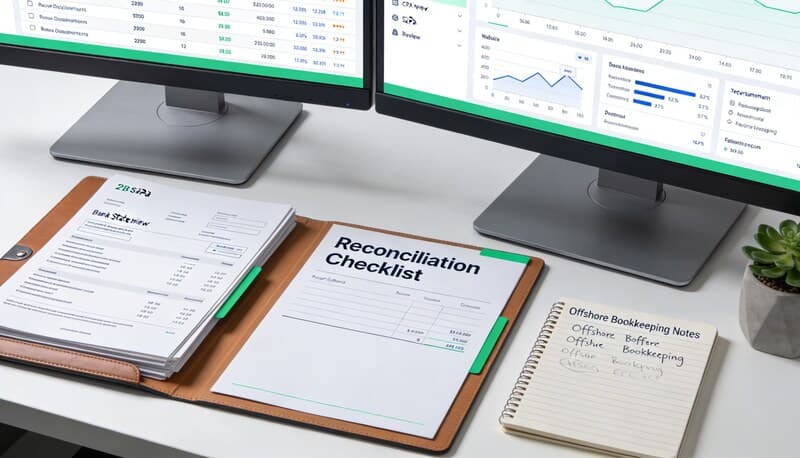
Bank Statement QA Checklist in 2026

A bank statement QA checklist is useful only if it catches problems before they become ledger problems.
That means before:
- import
- categorization
- reconciliation
Once the file is in the wrong downstream stage, QA becomes cleanup instead of prevention.
Quick decision snapshot
Start here.
| If your team mainly needs... | Better starting point |
|---|---|
| Better statement capture and extraction | Hubdoc, Dext, or AutoEntry |
| A trusted ledger path once QA is complete | Xero or QuickBooks |
| A workflow for QA, exception handling, and follow-up before import | Wesley |
What to stop treating as one step
- Capture is not QA.
- QA is not import.
- Import is not reconciliation.
Choose your workflow
Bank statement to CSV converter
Start from the general statement-conversion workflow.
PDF to CSV converter
Use the broad PDF-to-CSV workflow for statement and document cleanup.
Bank statement conversion hub
The full cluster for PDF, CSV, OCR, and review-first statement workflows.
Import bank statements into QuickBooks Online
QBO upload path for PDF, image, QBO, QFX, and CSV statement files.
Convert a bank statement PDF to CSV for free
Best for one-off statement cleanup and quick spreadsheet-ready exports.
Coverage and resources
Open the authority pages that support this workflow.
Supported banks
See which institutions have dedicated coverage pages and where statement fallback still makes sense.
Open page →
Supported statement types
See which source documents Wesley can clean up before export or import prep.
Open page →
Bank Statement Cleanup SOP for Bookkeepers
A bank statement cleanup SOP for bookkeepers who need a repeatable review process before exporting to QuickBooks, Xero, QIF, or spreadsheet workflows.
Open page →
What bank statement QA should actually verify
Good QA is not just "does this look about right?"
It should answer:
- is the statement complete?
- is the extracted structure stable?
- do signs behave correctly?
- are non-transaction rows removed?
- do totals and suspicious rows still need review?
- where do unresolved questions live?
If those are unclear, the team is not doing QA so much as hoping the downstream system catches it.
The practical QA checklist
Use this before import.
| QA area | What to verify | Why it matters |
|---|---|---|
| Scope and completeness | Account, date range, and pages are complete | Prevents silent omissions |
| Row structure | One row per transaction, no broken date or amount fields | Keeps imports stable |
| Sign handling | Debits, credits, transfers, and deposits are consistent | Prevents distorted categorization and rec |
| Noise removal | Headers, subtotals, balances, and notes are excluded | Keeps non-transaction rows out of the ledger |
| Duplicate and anomaly review | Repeats, suspicious totals, and broken merchants are checked | Stops avoidable downstream cleanup |
| Follow-up attachment | Questions stay tied to the exact item under review | Reduces repeated reviewer work |
What extraction-first tools are best at
Hubdoc's current positioning is about extracting statement data into a CSV for import.
Dext and AutoEntry sit in the same general category when the main value is:
- digitizing source material
- reducing manual entry
- getting rows out of statements
That is useful.
It is not the same as a full QA layer.
What ledger-native tools are best at
Xero and QuickBooks are strongest once the team trusts the file enough to:
- upload it
- review it in-system
- reconcile it
That is why QA done too late becomes expensive.
The ledger ends up absorbing work that should have been prevented earlier.
Where Wesley fits
Wesley is strongest when QA should live in the workflow itself, with:
- comments attached to the work item
- exceptions resolved before import
- follow-up tied to the same source-backed review task
That matters when the most expensive part of the process still happens between extraction and the ledger.
The handoff table
| Stage | Best tool type | Strong when... |
|---|---|---|
| Capture | Extraction-first tools | The issue is digitizing the statement |
| QA and review | Workflow-attached review system | The issue is making the file trustworthy |
| Reconciliation | Native accounting system | The issue is final posting and matching |
When Hubdoc, Dext, or AutoEntry is the right answer
Choose extraction-first tools when:
- the main pain is still getting the data out
- QA is manageable once the rows exist
When Xero or QuickBooks is the right answer
Choose the ledger-native path when:
- the file already is trustworthy enough to upload
- the team mainly needs downstream categorization and rec
When Wesley is the right answer
Choose Wesley when:
- QA still takes real reviewer work before import
- comments and unresolved items should stay attached to the exact statement item
A better diagnostic test
Use these questions.
| Question | If yes... |
|---|---|
| Is our main issue still extraction, not QA? | Start with extraction-first tools |
| Is our main issue making the file trustworthy before import? | Compare Wesley |
| Is our main issue final matching in the accounting system? | Start with Xero or QuickBooks |
Common mistakes
1. Treating QA as a reconciliation responsibility
That pushes preventable errors too far downstream.
2. Using a checklist with no workflow attachment
The checklist exists, but comments and exceptions still scatter into side channels.
3. Approving files because they are readable
Readable is not the same as trustworthy.
FAQ
What is a bank statement QA checklist?
It is a repeatable set of checks used to verify statement-derived output before import or reconciliation.
Is statement QA the same as statement review?
They overlap, but QA emphasizes defect prevention and readiness criteria before the handoff to downstream systems.
When should a team use Wesley for QA?
When QA still includes source-backed exceptions, comments, and follow-up that should stay attached to the work item before import.
Final takeaway
A useful bank statement QA checklist protects the handoff between:
- capture
- QA
- and reconciliation
That handoff is where a lot of avoidable accounting mess begins.
Ready to use the matching workflow?
Bank statement to CSV converter
Start from the general statement-conversion workflow.
Related reads
Discover adjacent articles without being sent to near-duplicate topics.