Accounting Firm Automation ROI: How to Increase Revenue Without Hiring More Staff

Most accounting firms do not increase revenue simply by working harder. They increase revenue by raising the amount of client work the team can deliver without increasing headcount at the same pace.
That is why searches like accounting firm automation ROI, how to increase accounting firm revenue, grow accounting firm without hiring, and bookkeeping automation for accounting firms are all pointing at the same business problem. Revenue growth is usually constrained by delivery capacity long before demand disappears.
Wesley helps on that exact constraint. It reduces repetitive bookkeeping work, makes capacity more visible, and gives firms a way to serve more clients with the same team.
Automation does not just save time. It changes revenue capacity.
The usual mistake is thinking about accounting automation only as a cost-saving tool.
In practice, the bigger upside is revenue capacity:
- the same reviewer can handle more clients
- partners spend less time firefighting low-value bookkeeping work
- turnaround gets faster, which supports retention and premium positioning
- fewer hours leak into non-billable cleanup and rework
That is why accounting firm automation ROI is not just a software line item. It is a growth question.
Choose your workflow
Tax workflow hub
The full cluster for W-9 collection, 1099 review, and filing-season cleanup workflows.
Collect a W-9 before filing a 1099
The cleanest timing and follow-up workflow before filing season turns reactive.
1099-K vs 1099-NEC
How to separate processor-reported payments from contractor compensation.
Why a contractor is missing from your QuickBooks 1099
A practical troubleshooting flow for inactive vendors, thresholds, and mapping issues.
Why credit card payments do not show up on 1099s
The exact reporting logic behind excluded card and payment-app transactions.
Coverage and resources
Open the authority pages that support this workflow.
Supported banks
See which institutions Wesley already covers and when statement fallback still matters.
Open page →
Integrations hub
See where Wesley fits before QuickBooks, Xero, QIF, Sage, and NetSuite workflows.
Open page →
Template library
Use saveable SOPs and checklists alongside the workflow pages.
Open page →
Step 1: create a real automation pipeline instead of one-off shortcuts
Revenue does not scale when automation lives in scattered hacks. It scales when the firm treats automation like an operating system for recurring bookkeeping work.
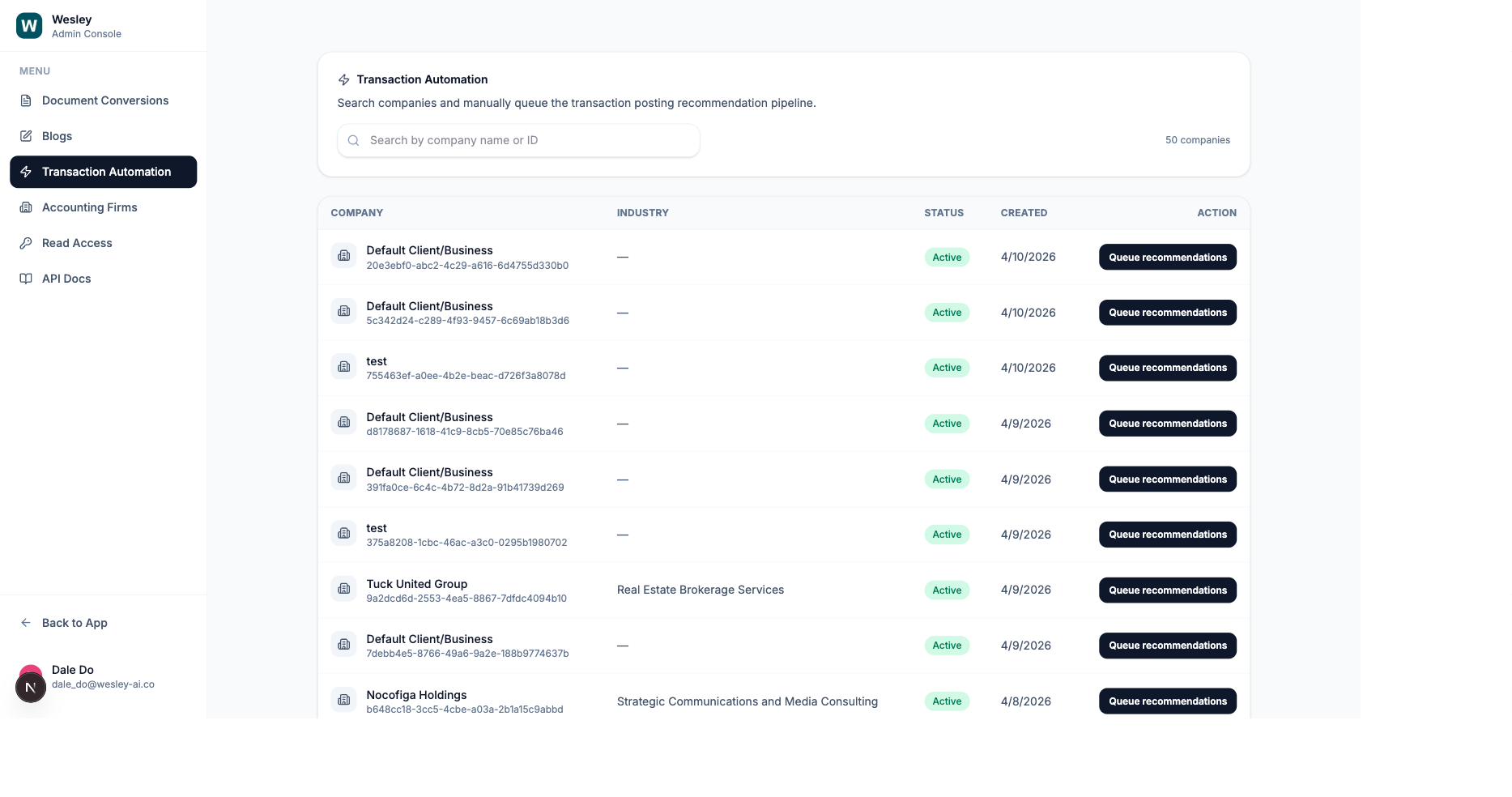
Wesley gives firms a structured transaction automation workflow rather than a loose collection of manual fixes. That matters because revenue grows faster when automation is repeatable across clients, not dependent on one power user remembering every workaround.
Step 2: measure automation against billable client capacity
If a firm wants more revenue, it needs to connect automation to a business outcome that actually matters.
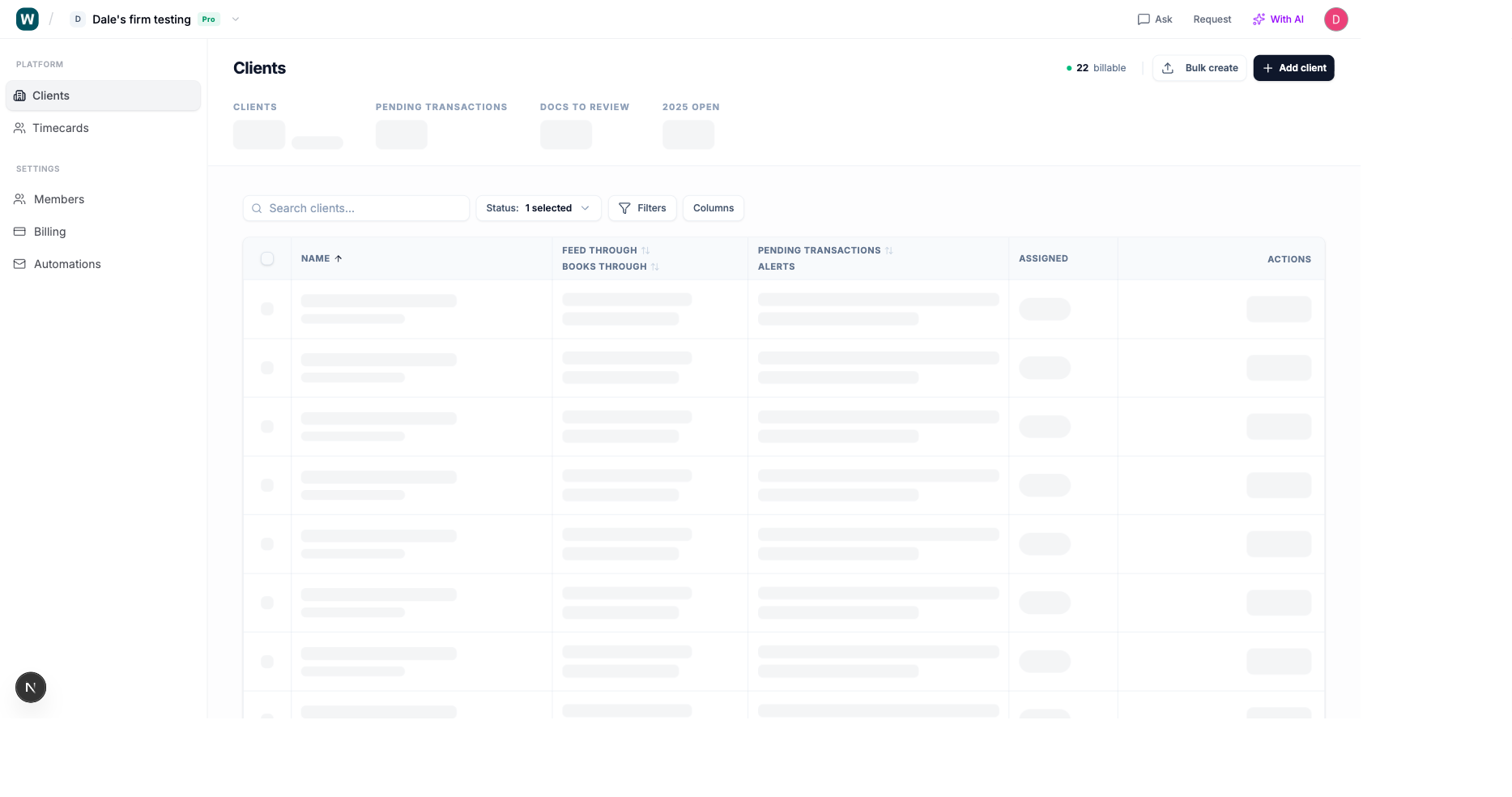
That outcome is usually not “hours saved” in the abstract. It is things like:
- more billable clients handled per manager or reviewer
- fewer clients stuck in cleanup bottlenecks
- better visibility into where pending transaction pressure is slowing the team down
Wesley helps make those constraints visible. Once the team can see where the backlog is forming, automation stops being theoretical and starts affecting how many clients the firm can actually serve profitably.
Step 3: automate recurring transaction decisions so senior time stays revenue-producing
A lot of firms cap revenue growth because senior accountants and managers are still spending too much time on repeatable categorization work.
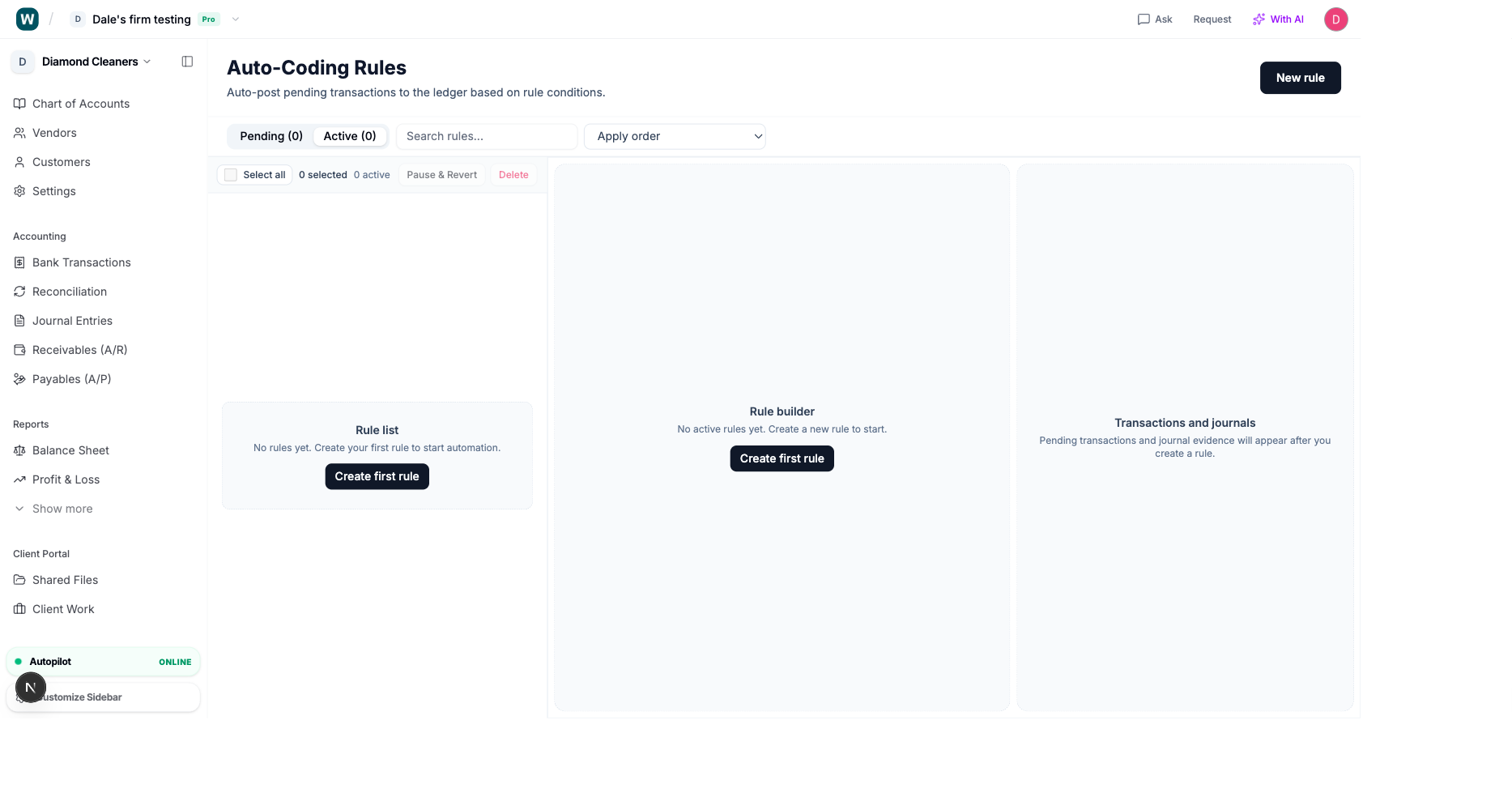
That is a direct margin problem. Every hour of experienced staff time spent on work that could have been automated is an hour not spent on review, advisory, client communication, or additional billable load.
With Wesley, firms can turn recurring transaction patterns into auto-coding rules and a more systematic automation layer. That means the team touches fewer obvious items manually and reserves human judgment for the exceptions that actually need it.
How accounting firm automation increases revenue in practice
For most firms, the revenue path looks like this:
- automate repeatable bookkeeping work
- reduce non-billable review drag and cleanup time
- increase the number of clients the same team can support
- improve turnaround enough to protect retention and enable higher-value service
That is why the best automation ROI for accounting firms often shows up as capacity, throughput, and client economics before it shows up as a neat “hours saved” dashboard.
FAQ: accounting firm automation and revenue growth
Can automation really increase accounting firm revenue?
Yes. The clearest path is not magic upselling. It is increasing delivery capacity, reducing write-offs, and enabling the same team to support more client revenue. Wesley is built around that operational leverage.
What should accounting firms automate first to improve profitability?
Start with high-volume recurring transaction categorization, review bottlenecks, and the workflows that repeatedly pull senior staff into low-value bookkeeping tasks.
How do firms grow without hiring linearly with revenue?
They standardize the workflow, automate the obvious work, and keep human attention focused on review and exceptions. That is how automation turns into margin and revenue capacity.
Final takeaway
If your firm is trying to grow revenue, the key question is not only how many leads you can close. It is how much client work your current team can deliver without burning out or leaking margin.
That is why Wesley is a strong fit for firms looking at accounting firm automation ROI, bookkeeping automation, and revenue growth without linear hiring. It helps turn automation into actual delivery capacity, which is what revenue growth depends on.
Build a calmer filing workflow
Keep contractor docs, payment exceptions, and follow-ups tied to the actual work
Wesley is strongest when the filing problem is really a workflow problem: missing documents, unclear payment channels, and last-minute cleanup before you can trust the numbers.
Related reads
Discover adjacent articles without being sent to near-duplicate topics.

How Short-Staffed Accounting Firms Can Increase Capacity Without Hiring More Bookkeepers

QuickBooks Live vs Bench in 2026: Which Bookkeeping Service Model Fits, and When You Need Workflow Instead